
PRP is probably the treatment I get asked about the most these days. Patients come in saying, "Doctor, my neighbour got a PRP injection for her knee and now she walks every morning. Can I also get it?"
Sometimes the answer is yes. Sometimes it is not. And that is exactly why I wanted to write this guide.
PRP has become very popular in India in the last few years, and with popularity comes a lot of confusion. Some clinics present it as a miracle that fixes everything. Some people dismiss it as a money-making trend. The truth is somewhere in between. PRP is a genuinely useful treatment for the right condition, in the right patient, done the right way. It is not a magic injection for every pain.
In this guide, I will explain what PRP actually is, what it can and cannot treat, what it costs, how many sessions you need, and how it compares with steroid injections and surgery. Honestly and simply.
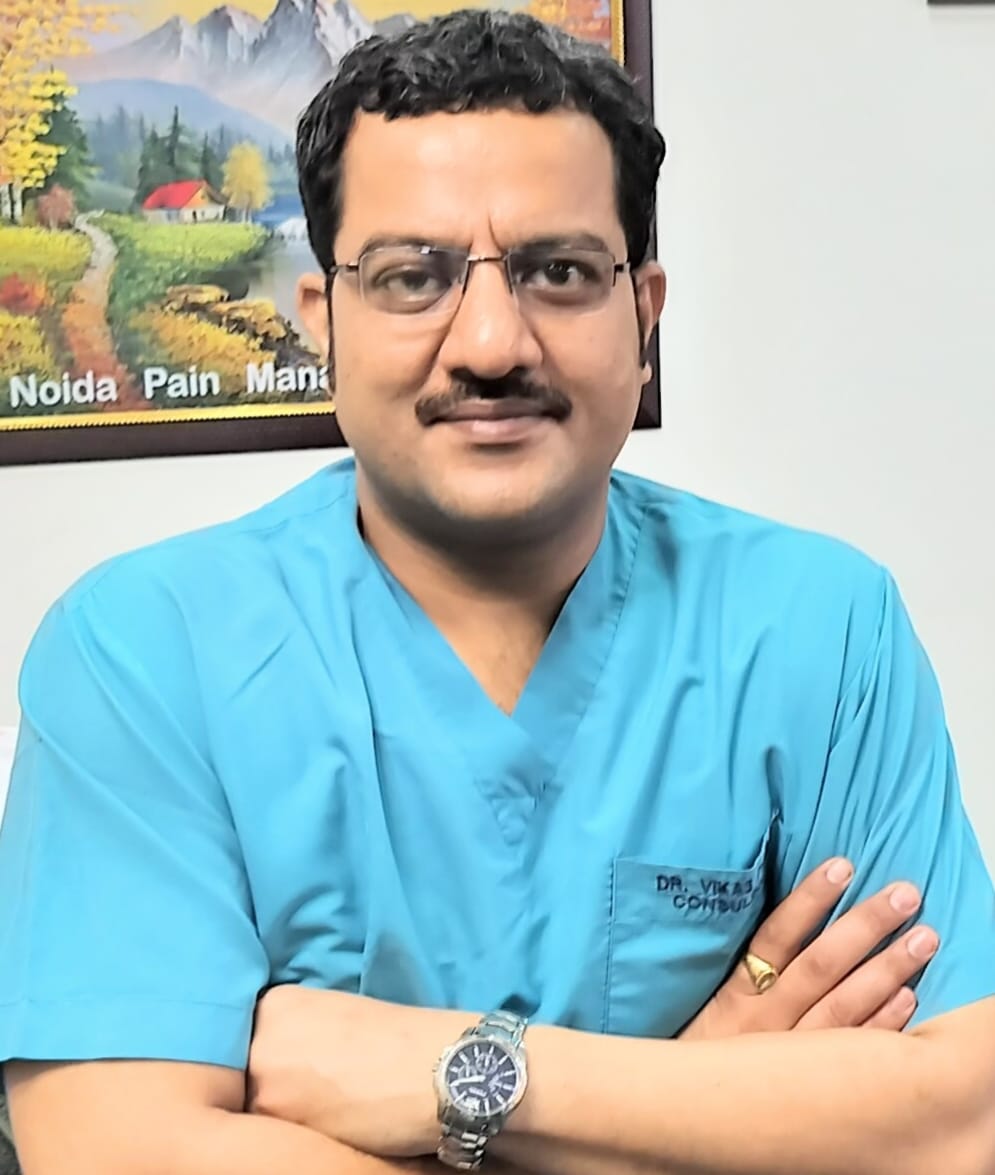
Noida Pain Management Clinic, Sector 117
- PRP uses your own blood's platelets and growth factors to support healing and reduce inflammation in damaged joints, tendons, and ligaments.
- It is safe because it is made from your own blood — no risk of allergy or rejection. The most common side effect is temporary soreness for 2 to 3 days.
- PRP works best for early to moderate knee osteoarthritis, tennis elbow, heel pain, rotator cuff problems, and frozen shoulder.
- One PRP session in India commonly costs Rs 5,000 to Rs 15,000 for a single joint, compared to Rs 1.5 to 4 lakh for knee replacement surgery.
- Most patients need 1 to 3 sessions, with maximum benefit showing between 6 to 12 weeks after injection.
- PRP is not a replacement for surgery in advanced cases, but it can delay or eliminate the need for surgery in early to moderate conditions.
What Is PRP Therapy and How Does It Work?
PRP stands for Platelet Rich Plasma.
Your blood is made of red blood cells, white blood cells, platelets and a yellowish liquid called plasma. Most people know platelets as the cells that help blood clot when you get a cut. But platelets do much more than that. They carry a large number of natural proteins called growth factors, which signal the body to repair damaged tissue, reduce inflammation and build new healthy cells.
When you get injured, your body sends platelets to that area to start the healing process. In chronic conditions like osteoarthritis or a long-standing tendon injury, this natural healing has slowed down or stopped. PRP gives the area a concentrated dose of these healing signals, collected from your own blood.
The procedure involves:
- Blood draw. I take a small amount of blood from your arm, usually 15 to 30 ml, just like a normal blood test.
- Centrifuge. The blood is placed in a special tube and spun in a machine called a centrifuge. The spinning separates the blood into layers.
- Platelet concentration. The layer rich in platelets is carefully collected. This gives a plasma with several times more platelets than normal blood.
- Preparing the area. The skin is cleaned well, and a local anaesthetic is used where needed so the injection is comfortable.
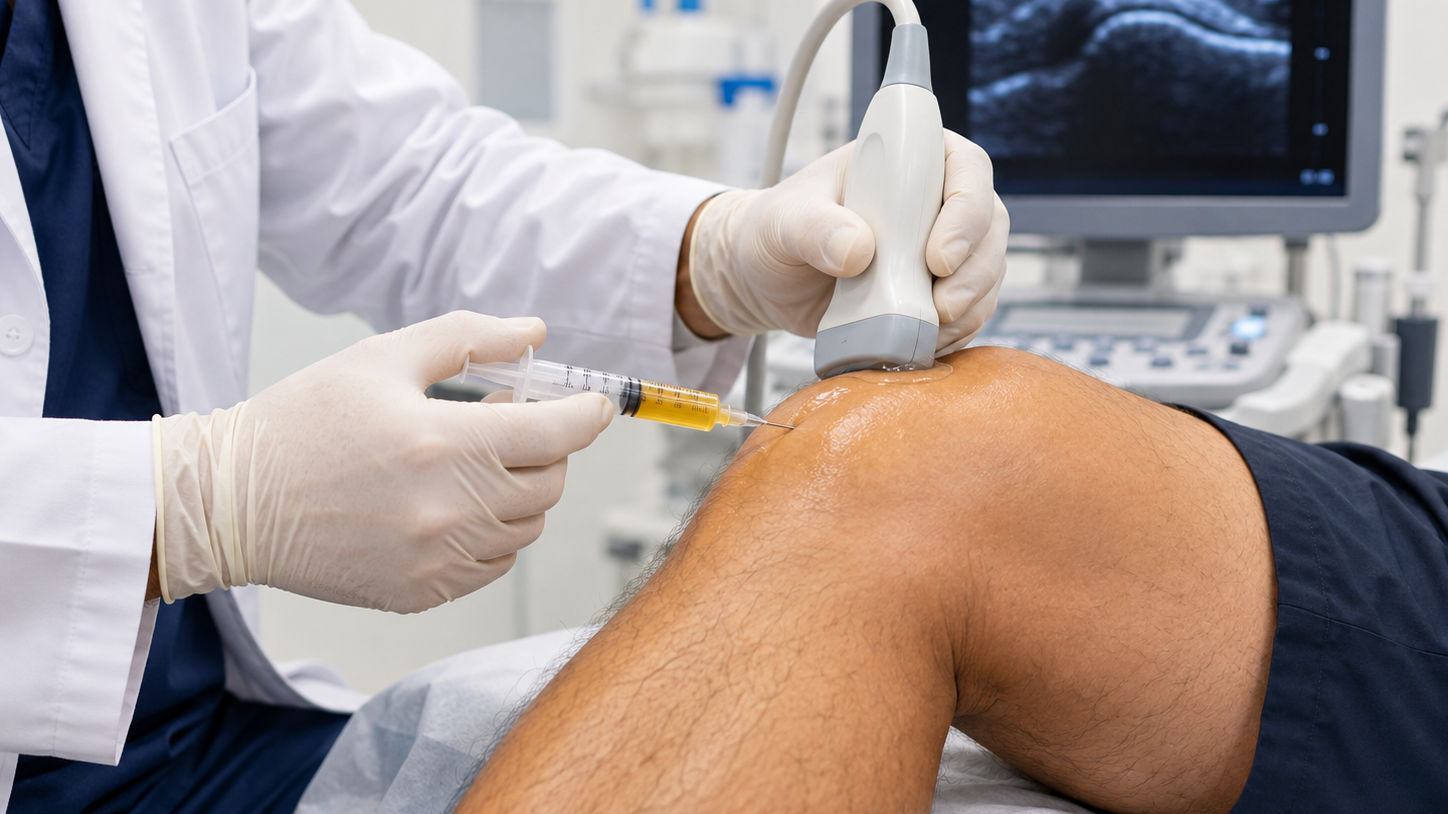
- Guided injection. The PRP is injected exactly into the target area, whether that is inside the knee joint, into a damaged tendon or around a ligament. I use ultrasound or X-ray guidance so the PRP reaches the right spot. Accuracy here directly affects results.
- Short rest and home. You rest for a short while and go home the same day. The whole visit takes around 45 minutes to an hour.
Why PRP Is Safe: No Allergy, No Rejection
Because PRP is made from your own blood, there is no risk of allergic reaction to the material itself and no risk of your body rejecting it. There is no foreign drug involved.
The most common side effect is soreness, heaviness or mild swelling at the injection site for 2 to 3 days. This is actually part of the healing response. As with any injection, there is a very small risk of infection, which is why the procedure is done in sterile conditions.
PRP is not suitable for everyone. It is usually avoided in people with certain blood disorders, very low platelet counts, active infection at the site, active cancer, or in some patients on blood-thinning medicines. This is why a proper check-up comes before the injection.
Most patients are asked to stop anti-inflammatory painkillers (like ibuprofen) for some days before and after the injection, because these can reduce the healing effect of platelets. Your doctor will tell you exactly which medicines to stop and for how long. Never stop a prescribed medicine, especially a blood thinner, on your own.
Conditions PRP Can Treat: Full List
PRP works best on conditions where the body needs help to heal tissue, like cartilage, tendons and ligaments. It works less well where the problem is mainly a pinched nerve or severe structural damage.
Knee Osteoarthritis and Cartilage Damage
This is the most common reason patients get PRP in India, and it is also one of the best-studied uses. In early to moderate knee osteoarthritis (Grade 1 to 3), PRP can reduce pain, reduce stiffness and improve walking. Many studies show PRP gives longer-lasting benefits than steroid or hyaluronic acid injections in these patients.
PRP does not grow a brand new knee. But it can calm the inflammation, support the remaining cartilage and improve how the joint functions. In advanced Grade 4 arthritis with bone rubbing on bone, results are less predictable.
Frozen Shoulder and Rotator Cuff
In rotator cuff tendinitis and partial rotator cuff tears, PRP can help the damaged tendon heal without surgery. In frozen shoulder, PRP is often used together with other treatments such as hydrodilatation and a structured exercise programme to reduce pain and help recover movement.
Tennis Elbow, Heel Pain, Hip Pain
Tennis elbow (lateral epicondylitis): This is one of the conditions where PRP has some of the strongest evidence. In long-standing tennis elbow that has not settled with rest and physiotherapy, PRP often gives better long-term results than a steroid injection.
Heel pain (plantar fasciitis): For chronic heel pain that has not improved with stretching, footwear changes and physiotherapy, PRP can help heal the inflamed plantar fascia.
Hip pain: PRP can be used in early hip osteoarthritis and in tendon problems around the hip, such as gluteal tendinopathy. For conditions like avascular necrosis, it is used selectively and only after proper evaluation.
PRP is also used in other tendon and ligament injuries, such as Achilles tendinitis, patellar tendinitis (jumper's knee) and certain sports ligament injuries.
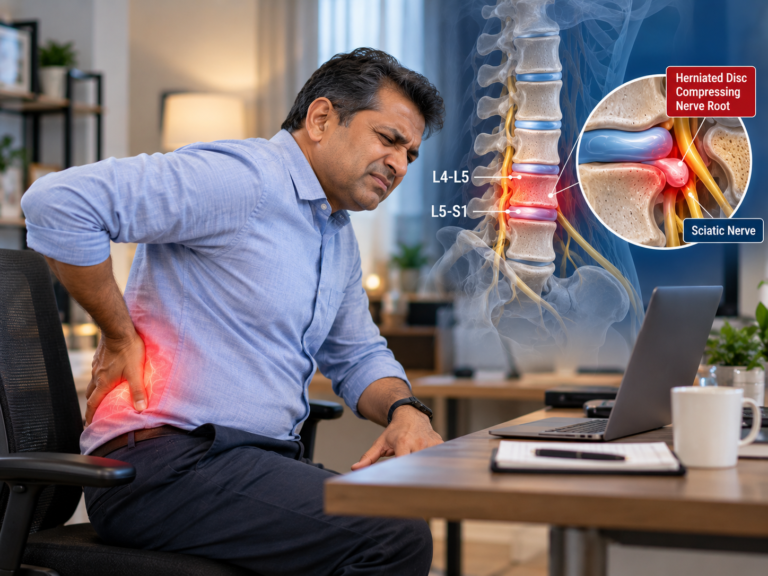
Slipped Disc and Chronic Back Pain
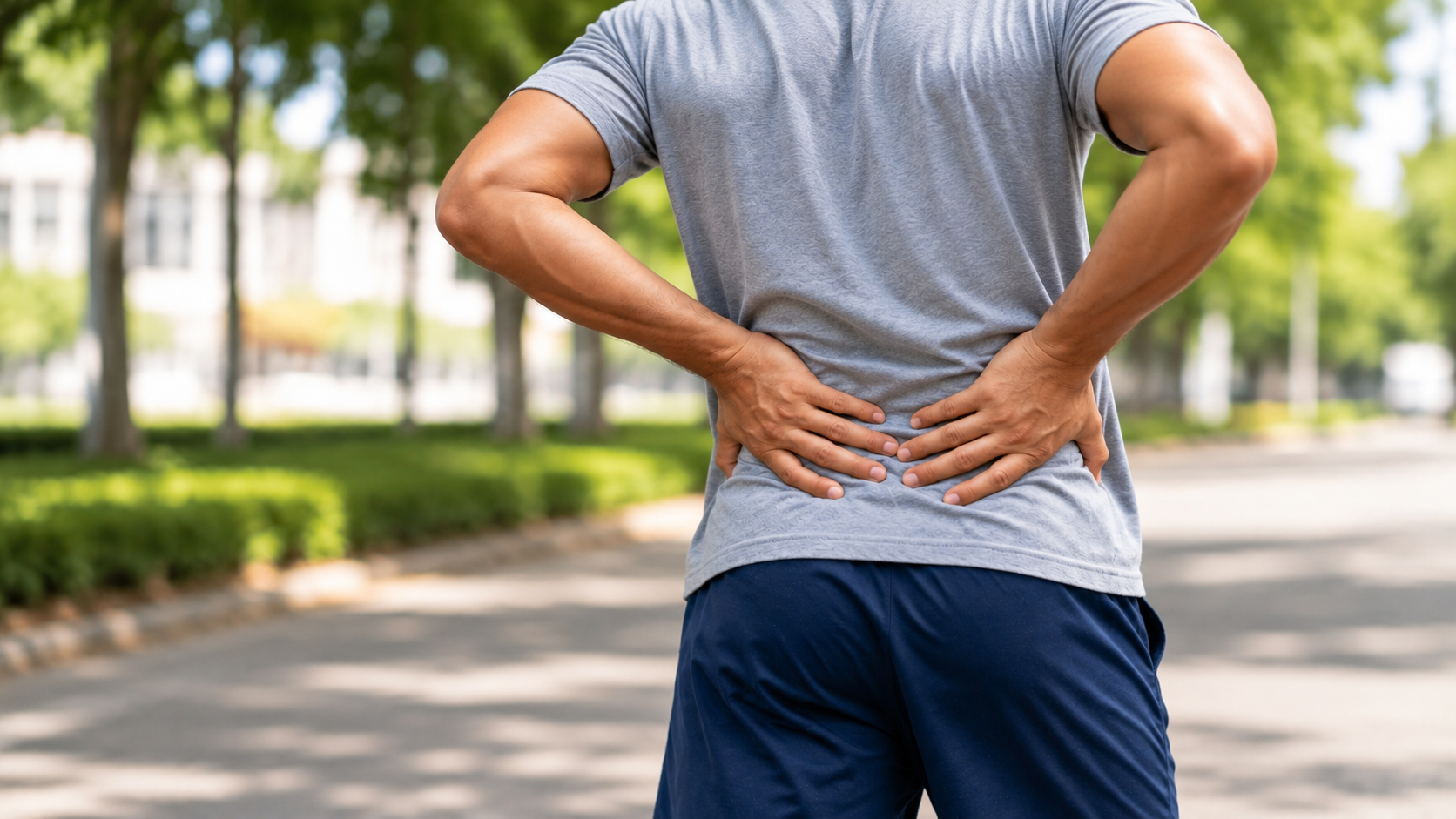
I want to be very honest here. PRP for back pain is an area that is still developing. It is being used in selected patients for certain types of disc degeneration and facet joint pain, and some patients do benefit. But the evidence is not as strong as it is for knee arthritis or tennis elbow.
For most slipped disc and sciatica patients, the first-line treatments are medicines, exercises, epidural steroid injection, nerve root block or ozone therapy. PRP may be considered in specific situations after a proper evaluation. If any clinic tells you PRP will definitely cure your slipped disc, please ask more questions.
Dr. Vikas Tyagi offers image-guided PRP therapy for knee, shoulder, elbow and other joint problems at Noida Pain Management Clinic. Same-day appointments available.
PRP Treatment Cost in India: Honest Breakdown
PRP cost in India varies widely depending on the city, the clinic, the type of PRP kit used and how the injection is given. As a general range, one PRP session for a single joint commonly costs somewhere between Rs 5,000 and Rs 15,000. Some large hospitals in metro cities charge more.
Here is what affects the cost:
- Type of PRP kit. Good quality kits that concentrate platelets properly cost more than basic tubes. This matters, because a weak preparation gives weak results.
- Image guidance. Injections given under ultrasound or X-ray guidance are more accurate. This may add to the cost, but it improves results.
- Number of joints. Treating both knees costs more than treating one.
- Number of sessions. Most patients need 1 to 3 sessions, depending on the condition.
- Consultation and follow-up. Some clinics include these, some charge separately.
PRP is usually not covered by most health insurance policies in India because it is done as an outpatient procedure. Please check with your insurer.
When you compare, think about the total cost. A knee replacement surgery in India can cost Rs 1.5 lakh to Rs 4 lakh per knee, plus hospital stay, physiotherapy and time off work. For a patient who is a good candidate for PRP, it can delay surgery by years at a fraction of the cost.
At our clinic, we explain the complete treatment plan and the total cost before starting, so there are no surprises.
How Many Sessions Do You Need?
There is no single number for everyone. It depends on the condition, how severe it is and how your body responds.
- Tennis elbow, heel pain, tendon problems: often 1 to 2 sessions
- Early to moderate knee osteoarthritis: usually 1 to 3 sessions, a few weeks apart
- Rotator cuff and shoulder problems: usually 1 to 2 sessions
- More advanced arthritis: may need a planned series, and results are less predictable
I usually reassess the patient 6 to 8 weeks after the first injection. If the improvement is good, we may not need another session right away. For osteoarthritis, some patients benefit from a repeat session after 6 to 12 months to maintain the effect.
When Will You Feel the Results?
This is where PRP is very different from a steroid injection, and it is important to know this so you do not get disappointed early.
First 2 to 3 days: You may feel soreness or heaviness at the injection site. This is normal. Use ice and avoid heavy activity.
Week 1 to 2: The soreness settles. Many patients do not feel a big change yet, because healing is just starting.
Week 3 to 6: This is when most patients start noticing real improvement: less pain, easier walking, better movement.
Week 6 to 12: Maximum benefit usually shows in this period.
How long it lasts: For knee osteoarthritis, the benefit commonly lasts 6 months to a year, sometimes longer. For tendon conditions like tennis elbow, the healing can be long-lasting if the cause (like repetitive strain) is also corrected.
Your effort matters too. PRP works best when combined with weight control, strengthening exercises and avoiding the habits that damage the joint. The injection starts the healing. Exercise and lifestyle keep it going.
PRP vs Steroid Injection vs Surgery: Comparison Table
| Parameter | PRP Injection | Steroid Injection | Surgery |
|---|---|---|---|
| How it works | Uses your own platelets to support healing and reduce inflammation | Strong anti-inflammatory medicine to quickly reduce pain and swelling | Repairs or replaces the damaged structure |
| Speed of relief | Gradual, 3 to 6 weeks | Fast, 2 to 3 days | Slow, after recovery period |
| How long relief lasts | Often 6 to 12 months or longer | Often 1 to 3 months | Long term |
| Effect on tissue | Supports healing | Repeated use can weaken cartilage and tendons | Replaces or repairs tissue |
| Hospital stay | None, same-day | None, same-day | Usually 3 to 5 days |
| Recovery time | Back to normal routine in 1 to 2 days | Immediate | Weeks to months |
| Main risks | Temporary soreness, very rare infection | Temporary sugar rise, tendon weakening with repeated use | Infection, clots, anaesthesia risks, persistent pain in some |
| Approximate cost in India | Rs 5,000 to Rs 15,000 per session | Lower than PRP | Rs 1.5 lakh to Rs 4 lakh or more |
| Best for | Early to moderate arthritis, tendon and ligament problems | Acute flare-ups needing quick relief | Severe structural damage, failed conservative treatment |
In my practice, these are not competitors. Each has its place. A steroid injection is useful to calm a severe flare-up quickly. PRP is better when we want longer-lasting relief and healing. Surgery is the right choice when the damage is too advanced for anything else to work.
PRP Therapy at Noida Pain Management Clinic
At Noida Pain Management Clinic in Sector 117, Noida, we use PRP for knee osteoarthritis, shoulder problems, tennis elbow, heel pain, hip conditions and other tendon and ligament injuries.
Here is how we do it:
- Proper diagnosis first. Not every patient is a PRP candidate. We examine you and review your X-ray or MRI before recommending it.
- Quality preparation. We use proper PRP kits so the platelet concentration is adequate.
- Guided injections. Every injection is given under ultrasound or X-ray guidance for accuracy.
- Clear costs upfront. You know the full plan and cost before we start.
- Honest advice. If PRP is not right for you, we will tell you and suggest what will actually help.
Patients come to us from Noida, Greater Noida, Delhi, Ghaziabad and across the NCR. Same-day appointments are available.
Dr. Vikas Tyagi offers honest advice and image-guided PRP therapy at Noida Pain Management Clinic. Book your consultation today.
FAQs: PRP Therapy India
Is PRP injection painful?
How much does PRP injection cost in India?
How many PRP sessions are needed for knee pain?
Can PRP avoid knee replacement surgery?
Is PRP better than a steroid injection?
Can I walk after PRP injection?
Who should not get PRP?
Does PRP work for everyone?
Medical disclaimer: This article is for general information only and is not a substitute for a medical consultation. Treatment depends on each patient's condition. Please consult a qualified doctor before starting any treatment.