
There is a conversation that happens in my clinic almost every day. A patient walks in, usually between 50 and 65 years old, and says something like this: "Doctor, my orthopaedic surgeon has told me I need a knee replacement. But I am scared of surgery. Is there any other option?"
The answer, in the majority of cases, is yes.
Now let me be very clear about something before we go any further. Knee replacement surgery is a good operation. It helps many people. I am not against surgery. What I am against is the idea that surgery is the first and only option for every patient with knee osteoarthritis. It should not be. There is a middle ground that most patients are never told about, and that middle ground includes treatments like PRP therapy that can delay or even eliminate the need for surgery entirely.
If you have been diagnosed with knee osteoarthritis, or if someone has already told you that you need a knee replacement, read this blog before you make that decision.
Noida Pain Management Clinic, Sector 117
- Knee osteoarthritis is an epidemic in India after 45 due to rising obesity, floor-level activities, vitamin D deficiency, lack of exercise, and stair climbing in multi-story homes.
- PRP therapy uses your own blood's growth factors to stimulate cartilage repair, reduce inflammation, and improve joint lubrication.
- PRP costs a fraction of knee replacement surgery (Rs 5,000–15,000 per session vs Rs 1.5–4 lakh per knee) with no downtime, no anaesthesia, and minimal risks.
- PRP works best for early to moderate osteoarthritis (Grade 1–2) and can delay or eliminate the need for surgery in many cases.
- Viscosupplementation (gel injection) is another non-surgical option that restores joint lubrication and can be combined with PRP.
- Surgery is recommended only when all non-surgical options have been tried and quality of life remains significantly affected.
Why Knee Osteoarthritis Is an Epidemic in India After 45
India has one of the highest rates of knee osteoarthritis in the world. And it is getting worse. A generation ago, severe knee problems were mostly seen in people over 65. Today, I regularly see patients in their late 40s and early 50s with significant cartilage damage.
Cartilage Wear: What Happens Inside Your Knee
Your knee joint has a layer of smooth, slippery cartilage covering the ends of the thighbone (femur) and shinbone (tibia). This cartilage is about 3 to 4 mm thick, and its job is to absorb shock and allow the bones to glide smoothly over each other when you bend, walk, or climb stairs.
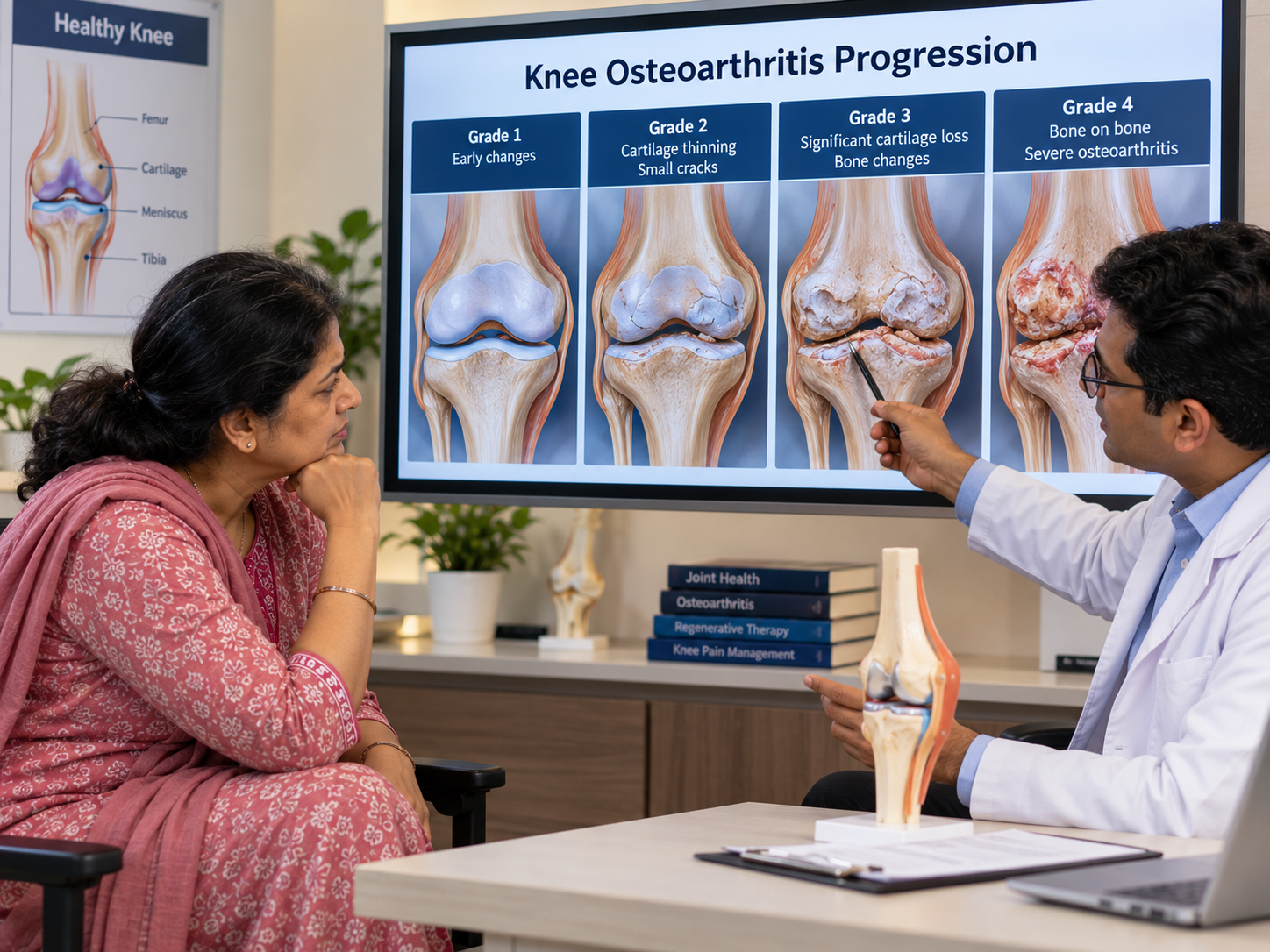
In osteoarthritis, this cartilage gradually wears away. It starts with softening and minor roughening of the surface (Grade 1), progresses to visible thinning and small cracks (Grade 2), then significant loss with exposed bone areas (Grade 3), and finally complete loss where bone rubs directly against bone (Grade 4).
The important thing to understand is that this process takes years. It does not happen overnight. And in the early and moderate stages, there is a lot that can be done to slow it down, reduce pain, and preserve what cartilage remains.
Obesity, Sitting Habits and Stairs: Why Indians Are More at Risk
Several factors make the Indian population particularly vulnerable to early knee osteoarthritis:
Rising obesity rates. Every extra kilogram of body weight puts approximately 4 kg of additional force on the knee joint. India's obesity rates have doubled in the last two decades, and this is directly driving the increase in knee problems.
Floor-level activities. Sitting cross-legged, squatting to use Indian-style toilets, and bending to do household chores all put the knee through extreme ranges of motion and high pressure. These activities are fine for young, healthy joints. But when done repeatedly over decades, they accelerate cartilage wear.
Vitamin D deficiency. An alarmingly high percentage of Indians are vitamin D deficient despite living in a sunny country. Vitamin D is essential for bone health, and its deficiency weakens the bone that supports the cartilage.
Lack of regular exercise. Strong muscles around the knee absorb shock and protect the cartilage. When people are sedentary, these muscles weaken, and the entire load falls directly on the cartilage.
Stair climbing in multi-story homes. Many Indian homes have 2 to 3 floors without a lift. Climbing stairs puts 3 to 4 times your body weight through the knee. For someone who is already overweight and has early cartilage thinning, daily stair climbing can significantly accelerate the damage.
PRP Therapy for Knee Pain: How It Works
PRP stands for Platelet Rich Plasma. It is one of the most promising non-surgical treatments available for knee osteoarthritis today, and I use it extensively in my practice.
What Is Platelet Rich Plasma
Your blood contains several components: red blood cells, white blood cells, plasma, and platelets. Platelets are small cell fragments that are best known for helping blood clot, but they also contain hundreds of proteins called growth factors that play a crucial role in tissue healing and regeneration.
PRP therapy concentrates these platelets to 3 to 5 times their normal level. When this concentrated plasma is injected into a damaged joint, it delivers a powerful dose of growth factors directly to the area that needs repair.
How PRP Regenerates Damaged Cartilage
When I inject PRP into an osteoarthritic knee, several things happen:
The growth factors stimulate the existing cartilage cells (chondrocytes) to produce new cartilage matrix. This does not mean the cartilage grows back to its original thickness, but it does mean that the remaining cartilage becomes healthier and more functional.
The anti-inflammatory proteins in PRP reduce the chronic inflammation inside the joint. This inflammation is what causes much of the pain and stiffness in osteoarthritis, and reducing it gives significant symptom relief.
PRP also improves the quality of the synovial fluid (the joint's natural lubricant), making the knee move more smoothly and comfortably.
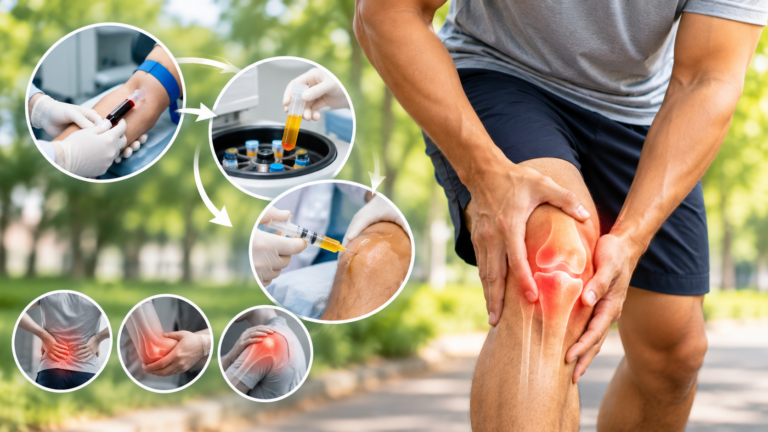
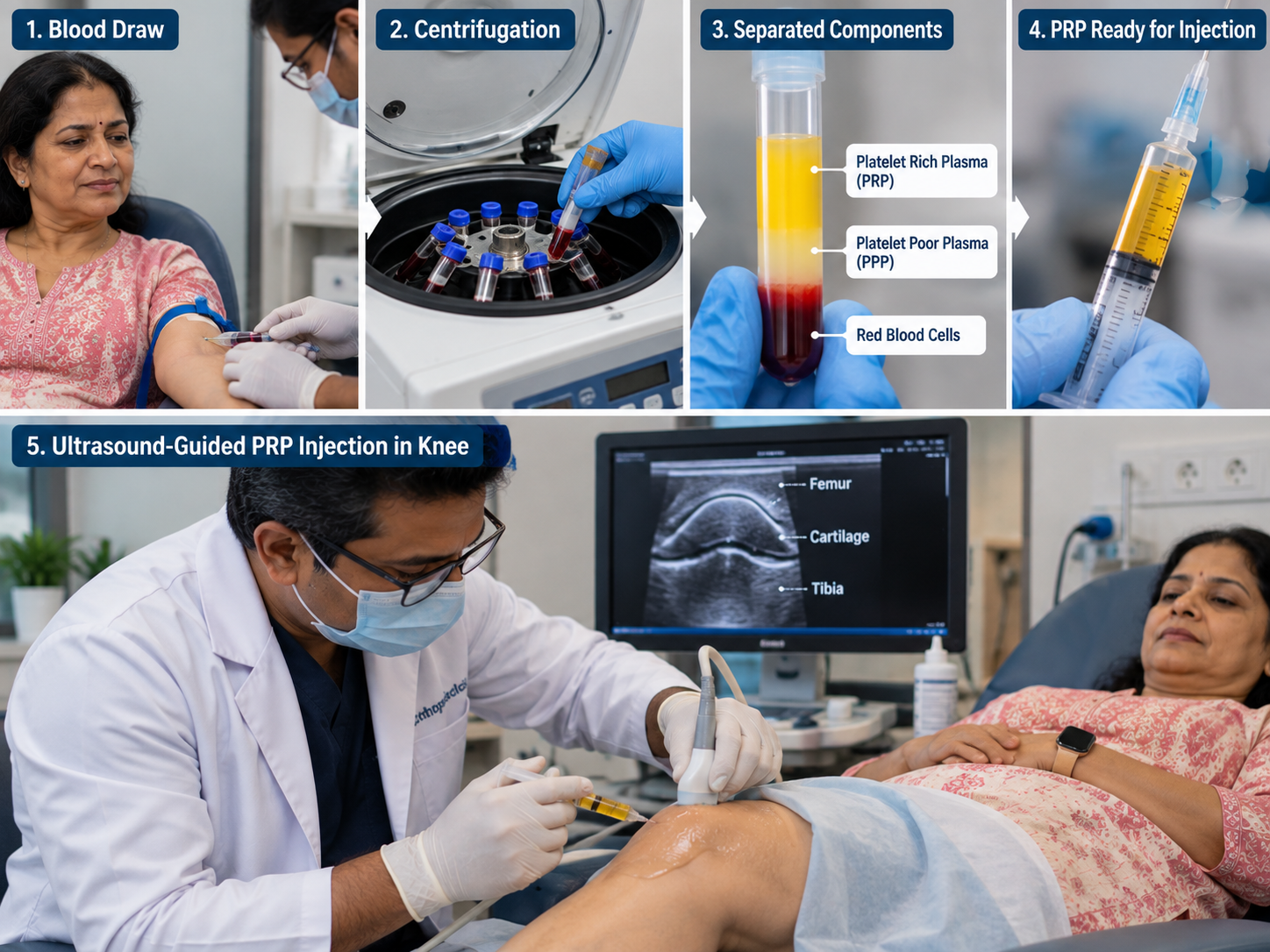
The procedure itself is straightforward. I draw about 15 to 20 ml of blood from your arm, spin it in a centrifuge for about 10 minutes to separate and concentrate the platelets, and then inject the PRP into your knee joint under ultrasound guidance. The whole process takes about 20 minutes. There is no cut, no anaesthesia, no hospital stay.
Get expert non-surgical knee osteoarthritis treatment from Dr. Vikas Tyagi at Noida Pain Management Clinic. Same-day appointments available.
PRP vs Knee Replacement Surgery: Honest Comparison
This is the comparison that most patients want but rarely get. So let me lay it out as honestly as I can.
Cost
PRP therapy costs a fraction of what knee replacement surgery costs. A PRP session typically ranges from Rs 5,000 to Rs 15,000 depending on the clinic and city. Even if you need 2 sessions, the total cost is well under Rs 30,000.
Knee replacement surgery costs anywhere from Rs 1.5 lakh to Rs 4 lakh per knee in India, depending on the hospital, the type of implant used, and whether it is a partial or total replacement. This does not include the cost of rehabilitation, physiotherapy, and time off work.
Recovery Time
After PRP: You walk out of the clinic the same day. There is no downtime. You may have mild soreness for a day or two. Most patients resume normal activities immediately. Full therapeutic effect builds over 3 to 8 weeks.
After knee replacement: Hospital stay is typically 3 to 5 days. You will need a walker or crutches for 2 to 4 weeks. Physiotherapy is required for 2 to 3 months. Full recovery and return to normal activities takes 3 to 6 months. Some patients take even longer.
Risk
PRP risks are minimal because you are using your own blood. There is no risk of allergy or rejection. The most common side effect is mild soreness at the injection site for a day or two. Serious complications are extremely rare.
Knee replacement risks include infection, blood clots, nerve damage, implant loosening, persistent pain (which happens in about 10 to 20 percent of patients), and the need for revision surgery down the line. It is a major operation under spinal or general anaesthesia, and like any major surgery, it carries real risks.
PRP works best for:
- Early to moderate osteoarthritis (Grade 1 to Grade 2)
- Patients who want to delay or avoid surgery
- Patients who are not ideal surgical candidates due to age, diabetes, heart conditions, or other health issues
- Active patients who cannot afford the long recovery time of surgery
- Patients whose pain is primarily inflammatory rather than purely mechanical
PRP is not ideal for:
- Severe Grade 4 osteoarthritis with complete cartilage loss and significant bone deformity
- Patients with severe knock-knee or bow-leg deformity
- Patients who have already had a failed knee replacement
The honest truth is that PRP is not a replacement for knee replacement surgery in every case. But it is an excellent alternative for the large number of patients who are in the early to moderate stages and who are being pushed towards surgery prematurely.
Viscosupplementation (Gel Injection): Another Non-Surgical Option
Besides PRP, there is another injectable treatment that works very well for knee osteoarthritis called viscosupplementation, or what patients often call the "gel injection" or "lubricant injection."
In a healthy knee, the synovial fluid is thick and viscous, like egg white. It lubricates the joint and provides cushioning. In osteoarthritis, this fluid becomes thin and watery, losing its protective properties.
Viscosupplementation involves injecting hyaluronic acid, which is a substance very similar to natural synovial fluid, directly into the knee joint. This restores the lubrication and cushioning effect.
The injection takes about 5 minutes. It is done under ultrasound guidance for accuracy. Most patients need one injection, and the effects last 6 to 12 months. It is particularly effective for patients who have stiffness and grinding as their main symptoms.
Some patients benefit from a combination of PRP and viscosupplementation. The PRP addresses the underlying cartilage damage and inflammation, while the viscosupplementation provides immediate improvement in joint lubrication and mobility.
Results at Noida Pain Management Clinic
At Noida Pain Management Clinic in Sector 117, Noida, knee osteoarthritis is one of the conditions we treat most frequently. Our approach is always to start with the least invasive, most effective option and escalate only if necessary.
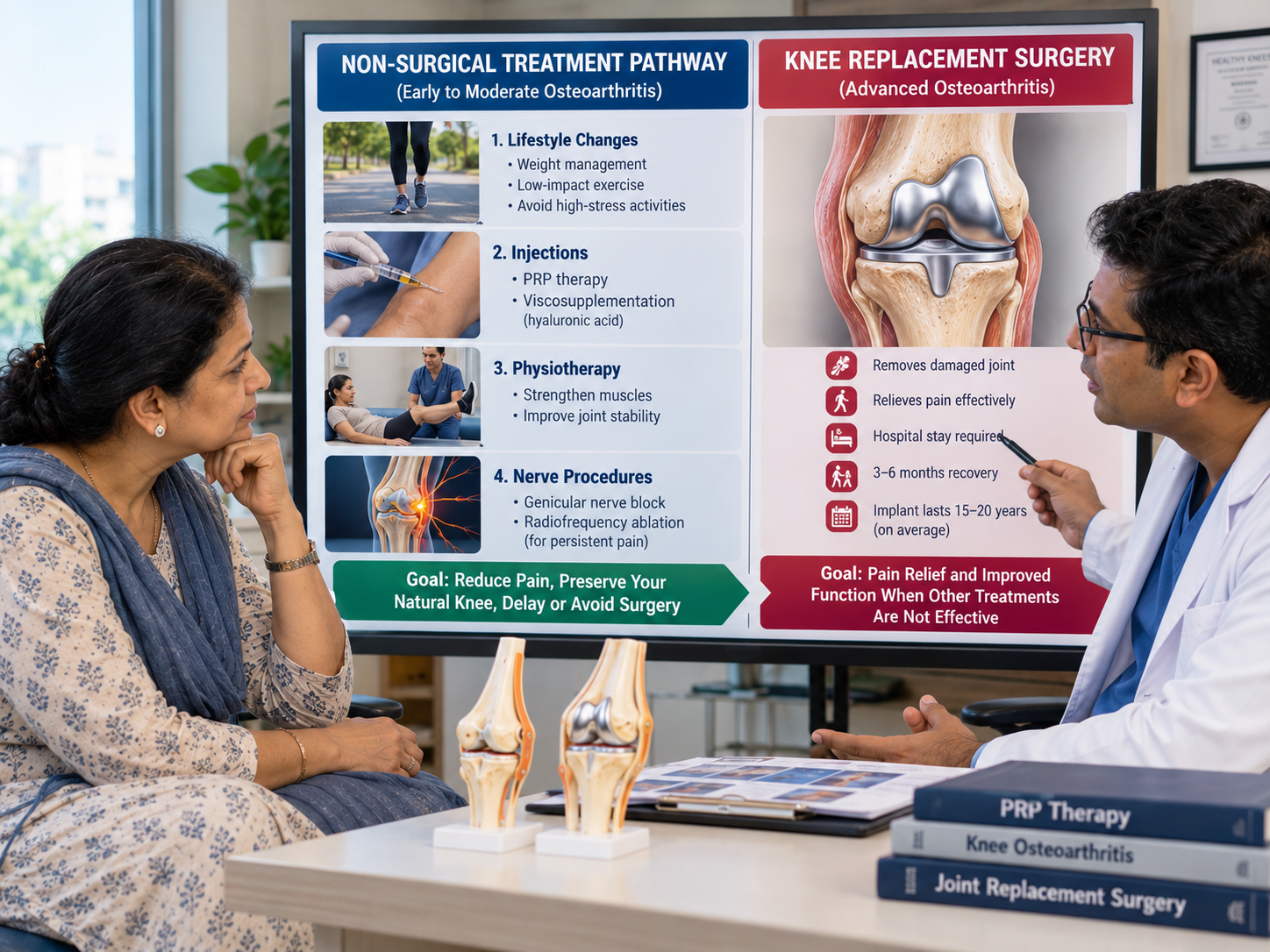
For most patients with early to moderate knee osteoarthritis, the treatment pathway looks like this:
Step 1: Thorough examination and X-ray or MRI to determine the exact grade and pattern of osteoarthritis.
Step 2: If the osteoarthritis is mild (Grade 1 to 2), we start with lifestyle modifications, weight management guidance, a structured exercise programme, and medication if needed.
Step 3: If symptoms persist despite Step 2, or if the osteoarthritis is moderate (Grade 2 to 3), we recommend PRP therapy, viscosupplementation, or a combination of both.
Step 4: For patients with more advanced disease or those who want longer-lasting pain relief, genicular nerve block or radiofrequency ablation can provide excellent results.
Step 5: Surgery is recommended only when all non-surgical options have been tried and the patient's quality of life remains significantly affected.
The majority of our knee patients achieve satisfactory relief at Steps 2 or 3 and never need to progress further.
Every injection at our clinic is done under ultrasound guidance. We discuss costs and treatment plans transparently before starting. And we offer same-day appointments because we know that knee pain does not wait.
Dr. Vikas Tyagi offers PRP therapy and other non-surgical treatments for knee osteoarthritis at Noida Pain Management Clinic. Get a second opinion before surgery.
FAQs: Knee Pain PRP Treatment
How long does PRP relief last for knee osteoarthritis?
Is PRP better than steroid injection for knee pain?
Can PRP therapy completely avoid the need for knee replacement?
How many PRP sessions are needed for knee pain?
Is PRP injection painful?
What is the cost of PRP injection for knee in Noida?
Can I walk immediately after PRP injection?
Medical disclaimer: This article is for general information only and is not a substitute for a medical consultation. Treatment depends on each patient's condition. Please consult a qualified doctor before starting any treatment.