
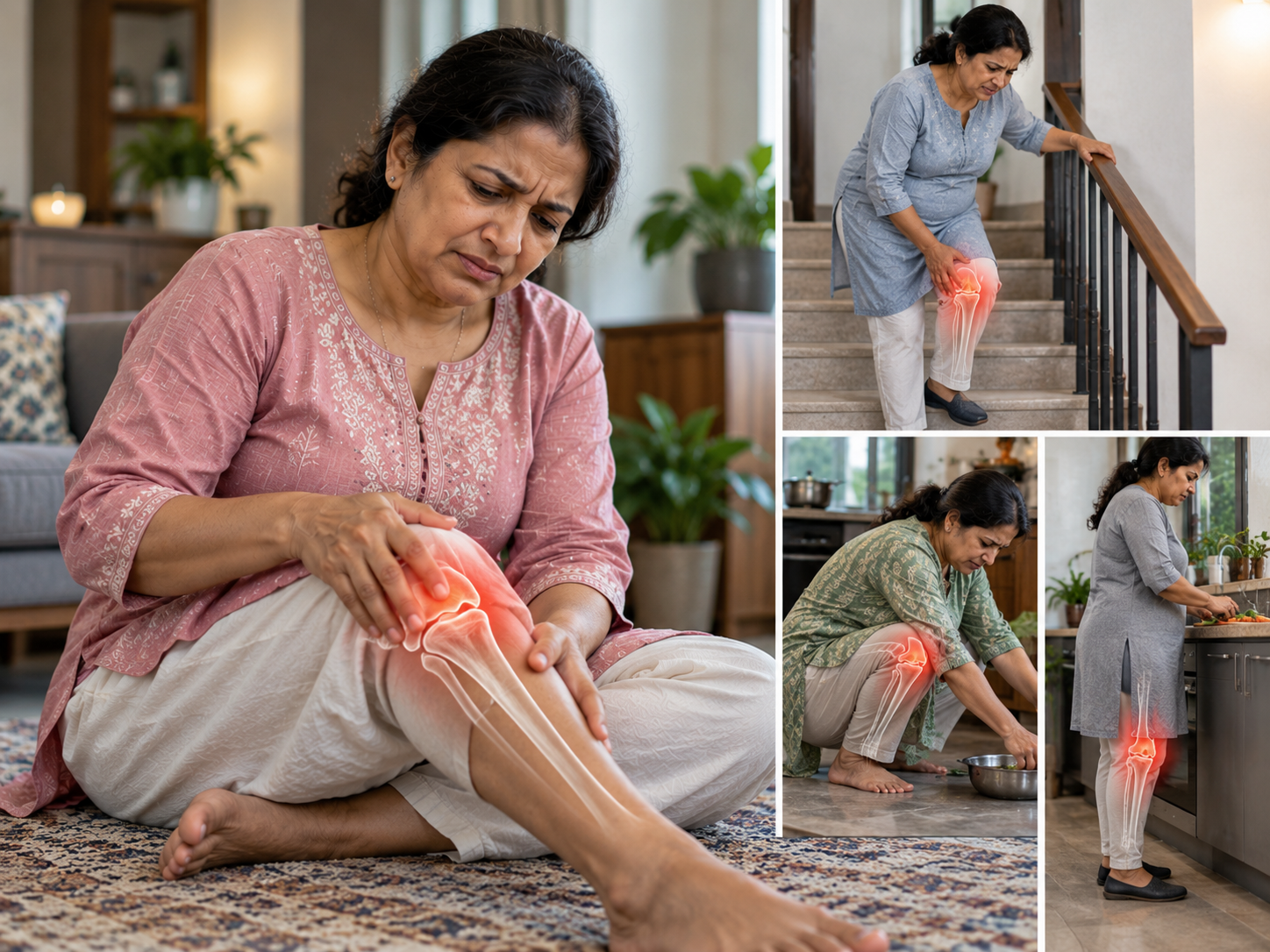
There is a pattern I see in my clinic that is impossible to ignore. A woman in her early 50s walks in with knee pain. She has been dealing with it for months, sometimes years. She has tried painkillers, balms, home remedies, and maybe even physiotherapy. Nothing has worked long enough. The pain keeps coming back, and now it is affecting everything. Climbing stairs, getting up from a chair, walking to the market, and sometimes even sleeping at night.
When I ask about the history of knee pain, I almost always find the same story. The pain started around the time of menopause, or shortly after. It began as a mild ache and gradually got worse. She assumed it was just "age" and that nothing could be done about it.
This is wrong. Something absolutely can be done about it. But first, you need to understand why this is happening.
If you are a woman over 50 dealing with knee pain, or if your mother, wife, or sister is struggling with it, this blog will explain the real reasons behind it and the treatments that actually work. No surgery talk. No complicated medical jargon. Just honest, practical information.
Noida Pain Management Clinic, Sector 117
- Menopause is a major trigger for knee osteoarthritis in women due to the drop in estrogen, which normally protects cartilage, controls inflammation, and supports bone density.
- Everyday habits like sitting cross-legged, squatting, climbing stairs, prolonged standing, and excess body weight accelerate knee damage.
- Early warning signs include morning stiffness under 30 minutes, pain that worsens with activity, clicking or grinding sounds, swelling, and difficulty with specific movements.
- Non-surgical treatments like PRP injection, viscosupplementation, and genicular nerve block can provide lasting relief without surgery.
- The right exercises—straight leg raises, wall sits, walking, and swimming—strengthen the knee, while deep squats, lunges, and high-impact activities should be avoided.
The Hidden Connection Between Menopause and Knee Pain
Most women do not know this, but menopause is one of the biggest triggers for knee osteoarthritis. It is not just about getting older. There is a very specific biological reason why knee pain explodes in women after the age of 45 to 50.
How Estrogen Protects Your Cartilage
Estrogen is not just a reproductive hormone. It plays a critical role in maintaining your joints, especially the cartilage that cushions your knee.
Estrogen does three important things for your knees:
Keeps cartilage hydrated and elastic: Healthy cartilage is like a sponge that absorbs shock when you walk, climb stairs, or bend your knees. Estrogen helps maintain the water content and flexibility of this cartilage.
Controls inflammation in the joints: Estrogen has natural anti-inflammatory properties. It keeps the chronic, low-grade inflammation inside the joint under control. This is the kind of inflammation that slowly eats away at cartilage over time.
Supports bone density around the joints: Strong bones provide a solid foundation for the knee joint. When bone density drops, the entire joint structure becomes more vulnerable to damage.
What Happens to Knee Joints After Menopause
When estrogen levels drop during menopause, all three of these protective effects weaken simultaneously.
The cartilage starts losing its water content and becomes thinner and more brittle. It loses its ability to absorb shock effectively. The inflammation inside the joint increases because the natural anti-inflammatory effect of estrogen is no longer there. And the bone density decreases, making the joint less stable.
This is why so many women who had perfectly healthy knees at 40 suddenly start developing pain at 50 or 52. The timeline matches almost exactly with the decline in estrogen levels.
And here is what makes it worse. Because this process is gradual, most women dismiss the early signs as "normal aging" and do not seek treatment until the damage has already progressed significantly. By the time they see a doctor, the cartilage loss may already be at a moderate or advanced stage.
The message is simple. If you are a woman and you started getting knee pain around menopause, it is not just age. There is a real biological reason, and there are real treatments that can help.
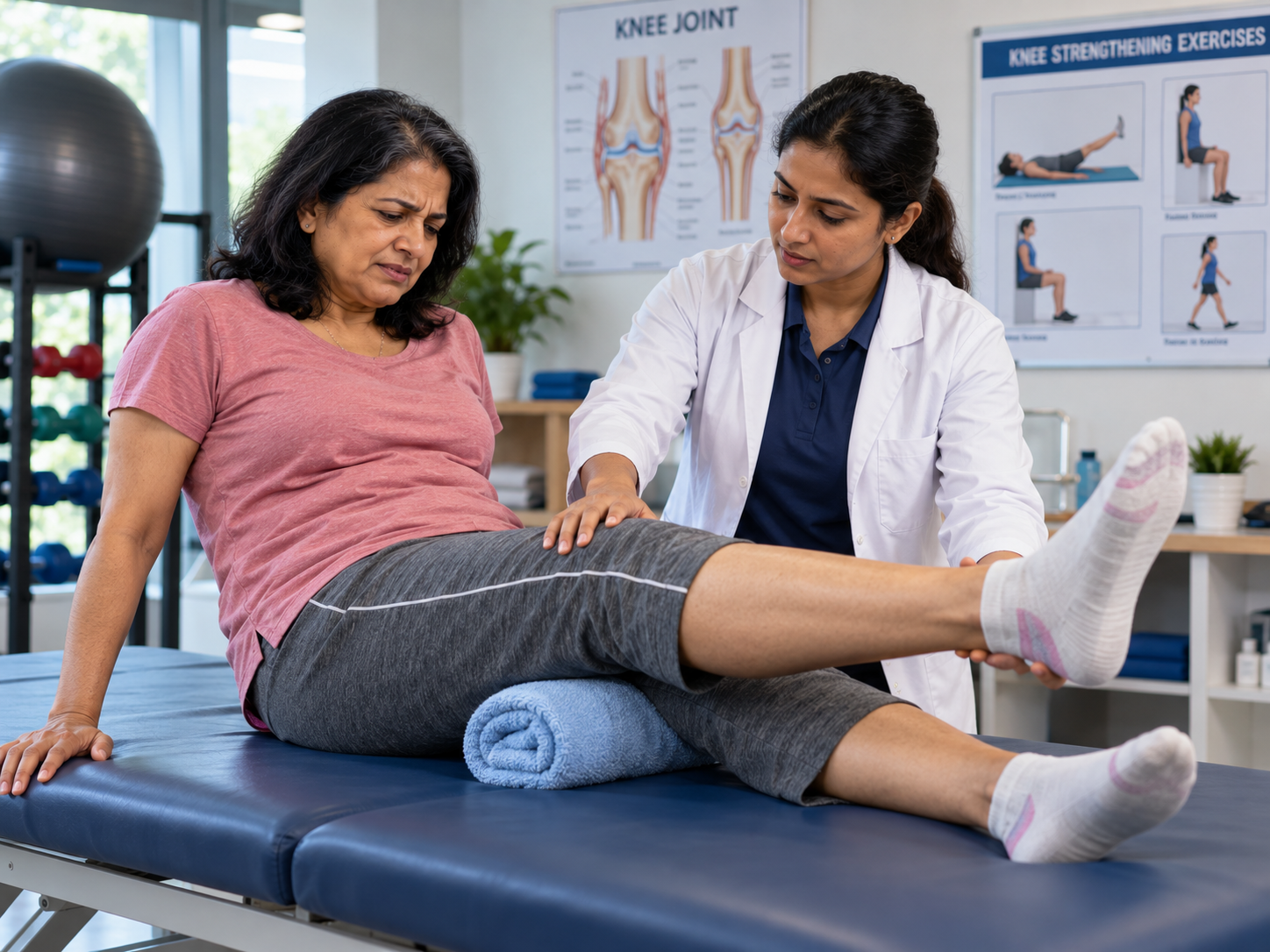
5 Daily Habits That Are Silently Destroying Your Knees
Beyond the hormonal changes, there are everyday habits that are incredibly common in Indian households and that accelerate knee damage. Most women do not realise these habits are harmful because they have been doing them their entire lives.
Sitting Cross-Legged on the Floor
This is probably the single most damaging habit for the knee joint. When you sit cross-legged, your knee is in a position of extreme flexion and rotation. The cartilage surfaces are compressed unevenly, and the meniscus (the shock absorber inside the knee) is under tremendous stress.
Doing this occasionally is fine. But when you sit cross-legged for hours every day while watching television, eating meals, or doing household work, the cumulative damage to the cartilage adds up over the years. By the time you are 50 and the estrogen protection is gone, the cartilage has already been weakened by decades of this stress.
I cannot count how many of my female patients tell me they sit cross-legged on the floor for most of the day. It is deeply ingrained in Indian culture, but it is terrible for your knees.
Climbing Stairs With Already Weak Knees
Stairs put 3 to 4 times your body weight of force through the knee joint. If your cartilage is already thinning due to menopause-related changes, climbing stairs daily without any strengthening exercises is like sandpapering an already worn surface.
Many of my patients live in houses with multiple floors and climb stairs 15 to 20 times a day. If your knees are already hurting, you need to minimise stair climbing and strengthen the muscles around the knee. The quadriceps muscle at the front of the thigh is your knee's best protector. When it is strong, it absorbs much of the force that would otherwise go directly to the cartilage.
Squatting Posture
Using Indian-style toilets, squatting to wash clothes, or bending down to pick things up from the floor all put the knee in deep flexion. At full squat, the pressure on the knee cartilage is 7 to 8 times your body weight. For a 70 kg woman, that is nearly 500 kg of pressure on the knee surface.
If you are over 50 and already have some cartilage thinning, regular squatting will accelerate the damage. Switching to a Western-style toilet, using a stool while working in the kitchen, and avoiding deep squats can make a meaningful difference.
Standing for Long Hours Without Support
Many women spend hours standing in the kitchen, at religious functions, or during social gatherings. Prolonged standing without movement causes the knee joint to stiffen. The fluid inside the joint does not circulate properly, and the cartilage does not get the nutrients it needs.
If you need to stand for long periods, shift your weight from one leg to the other every few minutes, wear supportive footwear, and take short walking breaks.
Ignoring Body Weight
I say this with sensitivity, but it is important. Every extra kilogram of body weight adds approximately 4 kilograms of extra force on the knee joint. A woman who is 10 kg overweight is putting an additional 40 kg of force on her knees with every step.
Weight management is not about appearance. For knee health, it is one of the most impactful things you can do. Even losing 5 kg can make a noticeable difference in knee pain levels.
Get expert, non-surgical knee osteoarthritis treatment from Dr. Vikas Tyagi at Noida Pain Management Clinic. Same-day appointments available.
Early Warning Signs of Knee Osteoarthritis in Women
Osteoarthritis does not appear overnight. It develops gradually, and the early signs are often dismissed as minor aches. Here are the signs you should not ignore:
Morning stiffness that lasts less than 30 minutes. If your knees feel stiff when you first wake up and it takes a few minutes of movement to loosen them, that is an early sign.
Pain that increases with activity and improves with rest. If your knees hurt more after walking, climbing stairs, or standing, but feel better when you sit down, that pattern points to osteoarthritis.
A clicking, grinding, or crunching sound when you bend the knee. Doctors call this crepitus. It happens because the smooth cartilage surface has become rough and irregular.
Swelling around the knee. This may not be obvious at first. Sometimes you notice that one knee looks slightly larger than the other, or that the area around the kneecap feels puffy.
Difficulty with specific activities. Getting up from a low chair, squatting, climbing stairs, or getting in and out of a car becomes increasingly difficult.
Pain that comes and goes initially but becomes more constant over time. In the early stages, you might have a few bad days followed by good weeks. As the condition progresses, the pain becomes more persistent.
- You recognise three or more of the early warning signs listed above.
- Knee pain is affecting your sleep or daily activities.
- You have tried painkillers, physiotherapy, or home remedies without lasting relief.
- The pain started around menopause and has been gradually worsening.
Non-Surgical Treatment Options That Give Lasting Relief
Here is the part that matters most. What can actually be done to treat knee osteoarthritis without surgery?
Medicines and Exercises
Usually patients have already tried them so mostly they offer not much advantage. However if the pain is of recent duration then they can be tried for some time but not for long as they may be harmful also.
PRP Injection: Regenerate Cartilage
PRP stands for Platelet Rich Plasma. This is the treatment I recommend most often for knee osteoarthritis because it does not just reduce pain temporarily. It actually promotes healing of the damaged cartilage.
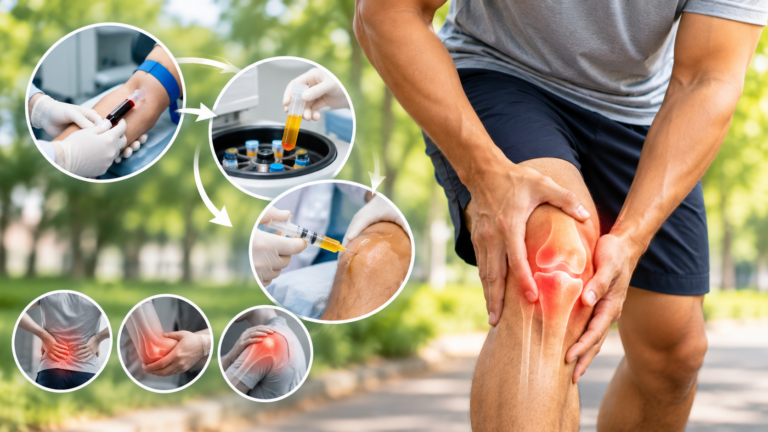
Here is how it works. I draw a small amount of your blood, spin it in a centrifuge to concentrate the platelets (which contain natural growth factors), and inject the concentrated plasma directly into the knee joint under ultrasound guidance.
The growth factors stimulate the remaining cartilage cells to repair and regenerate. They also reduce the inflammation inside the joint. The result is reduced pain, improved mobility, and slowing down of further cartilage loss.
Most patients need 1 to 2 PRP sessions. Improvement begins within 2 to 3 weeks and continues over the next 2 to 3 months. The effects typically last 6 months to a year, sometimes longer. It is a 15-minute procedure with no cut, no hospital stay, and no downtime.
PRP works best in early to moderate osteoarthritis (Grade 1 to Grade 3). In very advanced cases (Grade 4 with bone-on-bone contact), the results are less predictable, but many patients still get meaningful relief.
Knee Joint Lubrication Injection (Viscosupplementation)
In a healthy knee, there is a thick, gel-like fluid called synovial fluid that lubricates the joint and helps the cartilage surfaces glide smoothly over each other. In osteoarthritis, this fluid becomes thin and watery, losing its ability to cushion the joint.
Viscosupplementation involves injecting hyaluronic acid (a substance very similar to natural joint fluid) directly into the knee. This restores the lubrication and cushioning effect, reducing pain and improving knee movement.
The injection takes about 5 minutes. Most patients need one injection, and the effects last 6 to 12 months. It is particularly effective for patients who have moderate osteoarthritis with significant stiffness and grinding.
Genicular Nerve Block
For patients with more advanced osteoarthritis who are not candidates for or do not want knee replacement surgery, genicular nerve block is an excellent option.
The genicular nerves are small nerves around the knee that carry pain signals to the brain. By blocking these nerves with a targeted injection, I can significantly reduce knee pain without touching the joint itself. If the initial block gives good relief, we can do a more permanent procedure called radiofrequency ablation, which provides pain relief lasting 6 months to a year or more.
This is especially useful for elderly patients or those with other health conditions that make surgery risky.
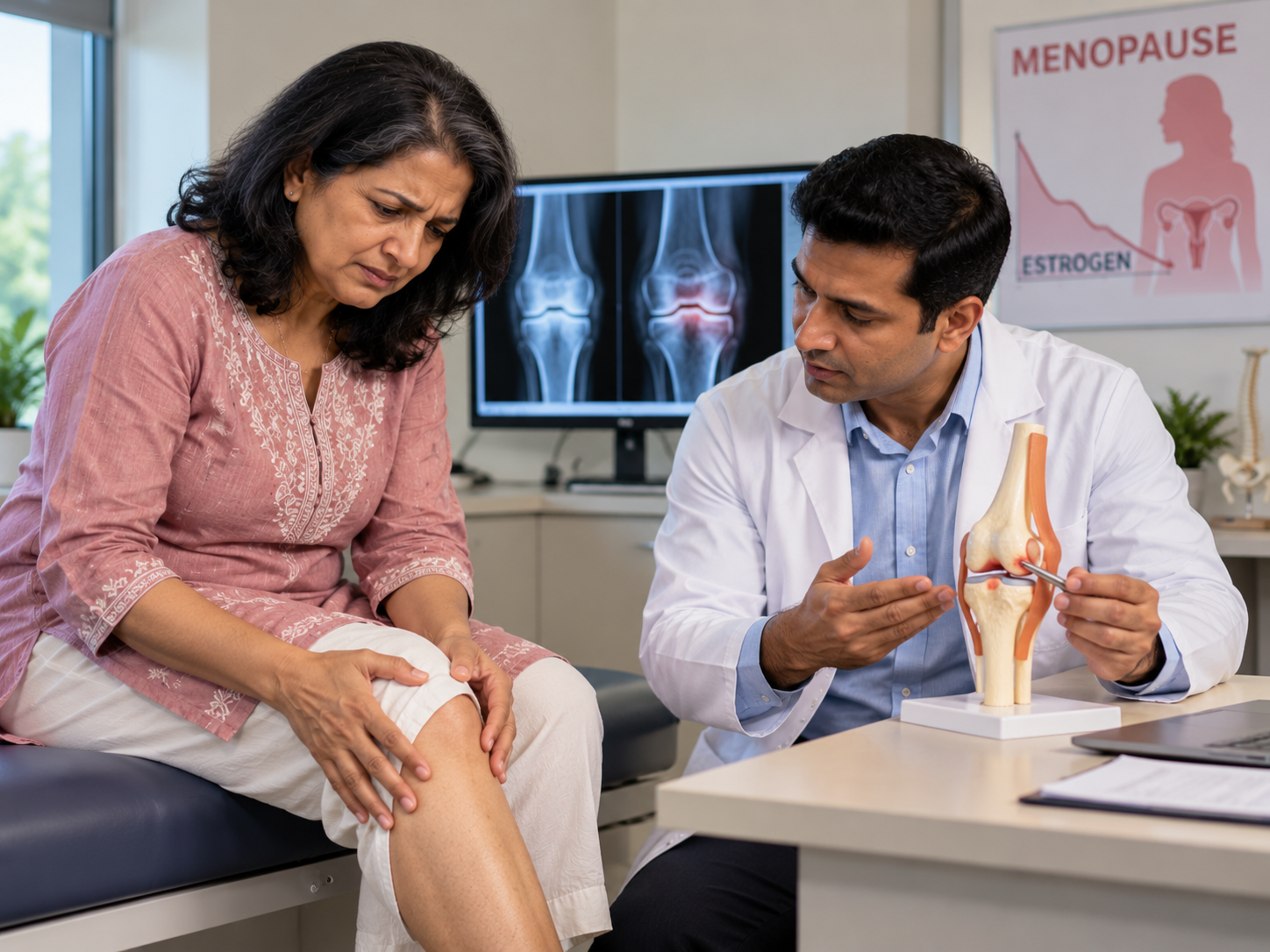
Exercises That Actually Help (and Ones to Avoid)
Exercise is crucial for managing knee osteoarthritis, but the wrong exercises can make things worse. Here is a practical guide.
Exercises That Help
Straight leg raises. Lie on your back, keep one leg straight, and slowly raise it about 30 cm off the ground. Hold for 5 seconds and lower it slowly. Do 10 repetitions, 3 times a day. This strengthens the quadriceps without putting any stress on the knee joint.
Wall sits. Stand with your back against a wall and slowly slide down until your knees are bent at about 30 to 45 degrees (not a full squat). Hold for 10 to 15 seconds and slide back up. This builds quadriceps strength in a controlled way.
Walking. Regular walking on flat surfaces is excellent for knee health. It keeps the joint mobile, improves circulation, and strengthens the muscles. Start with 15 to 20 minutes and gradually increase. Walking in a park or on a treadmill is better than walking on concrete roads.
Swimming or water exercises. Water supports your body weight, so the stress on the knee is minimal. Swimming, water walking, or simple leg movements in a pool are some of the best exercises for knee osteoarthritis.
Exercises to Avoid
- Deep squats, lunges, and any exercise that requires bending the knee beyond 90 degrees.
- Running or jogging on hard surfaces.
- Stair climbing as exercise (using the stairs at home is different from doing stair exercises at the gym).
- High-impact activities like jumping or skipping.
- Any exercise that causes sharp pain in the knee during or after doing it.
The golden rule is: if it hurts, stop. Pain is your body telling you that the exercise is too much for the current state of your knee.
Treatment at Noida Pain Management Clinic
At our clinic in Sector 117, Noida, knee osteoarthritis is one of the conditions we treat most frequently. We see women from across Delhi NCR who have been told that their only option is knee replacement surgery, and in the majority of cases, we are able to provide significant relief without any surgery.
Every injection is done after explaining the nature of disease and our aim of procedure. We discuss the complete treatment plan and costs upfront. And we offer same-day appointments because we understand that living with knee pain is not something you should have to tolerate while waiting for a consultation.
Dr. Vikas Tyagi offers advanced non-surgical treatments for knee pain at Noida Pain Management Clinic. Don't wait for the damage to progress.
FAQs: Knee Pain in Women After 50
Is knee osteoarthritis curable or can it only be managed?
At what stage of osteoarthritis does knee replacement become necessary?
Can walking make knee osteoarthritis worse?
Why do women get knee osteoarthritis more than men?
How many PRP sessions are needed for knee osteoarthritis?
Is it safe to exercise with knee osteoarthritis?
Can diet help with knee osteoarthritis?
Medical disclaimer: This article is for general information only and is not a substitute for a medical consultation. Treatment depends on each patient's condition. Please consult a qualified doctor before starting any treatment.